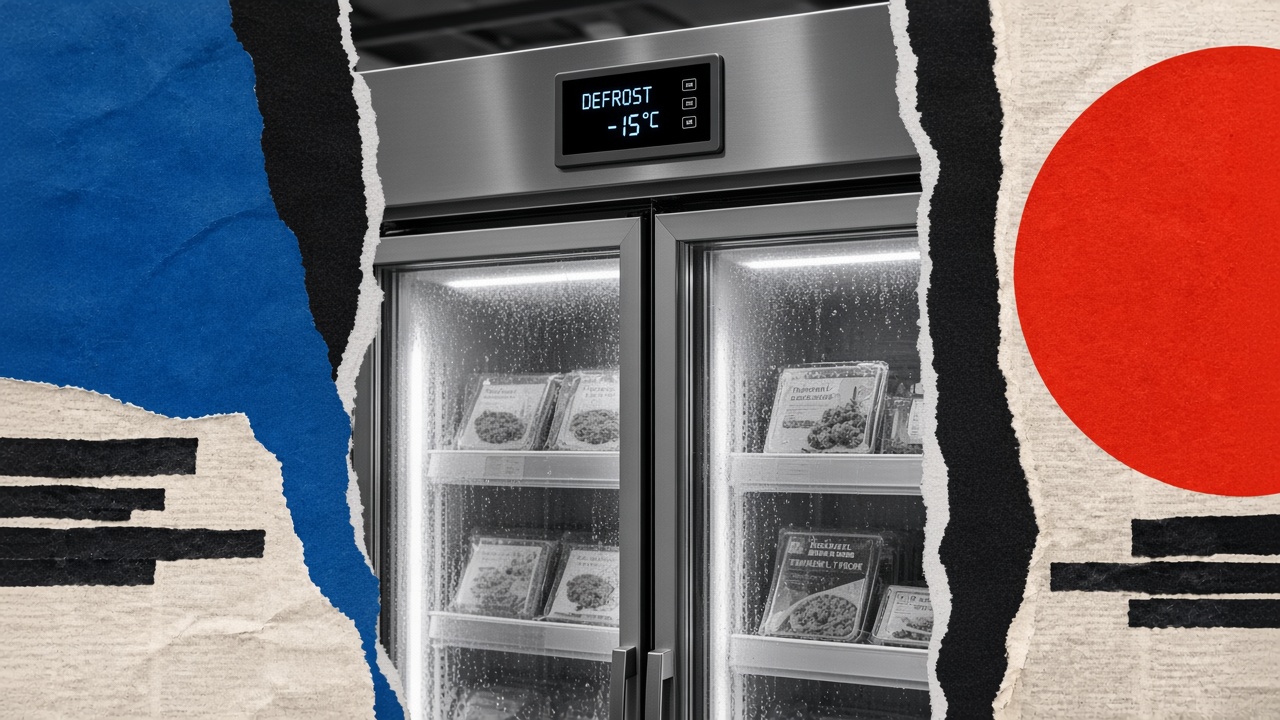
A supermarket can lose a night's stock because someone remotely changes a refrigeration setting. In October, a cyberattack disrupted refrigeration at hundreds of French supermarkets. On 2 November, retailers across Europe reported similar disruptions, and some stores had to pull chilled and frozen food from sale.
What happened
Overnight on 11–12 October, attackers altered temperature and defrost settings at French supermarkets. Spain's INCIBE-CERT reported that the attack affected hundreds of supermarkets, with temperatures reaching up to 50°C in some units, stock losses and small fires at some locations. France's CERT-FR reported compromises involving Danfoss AK-SM and AK-SC, Copeland XWEB and Dixell XWEB equipment. It advised operators to remove direct internet exposure from management interfaces and check configurations, particularly defrost schedules. [1–2]
On 2 November, retailers in Belgium, Luxembourg, Sweden, the Netherlands, Ireland and Estonia reported refrigeration disruptions. A Swedish ICA store manager told Reuters that the store's freezers reached 50°C. In Belgium, a contractor that operates Delhaize's refrigeration said affected units had been switched into defrost mode. [3–4]
Defrost is a normal operating function. Le Monde reported that attackers in France extended defrost cycles from one hour to eight, delaying alarms. For operators, the immediate question is who can issue those commands remotely and whether the store will know in time if the settings change. [5]
Danfoss published security advisories for its AK-SM 8xxA series in March and August 2025. In August 2026, Claroty's Team82 published research detailing vulnerabilities in the AK-SM 800A web management interface. Public reporting has yet to establish which vulnerabilities, if any, were exploited. French prosecutors opened a cybercrime investigation, and investigators have yet to establish a link between the October and November incidents. [3, 5–8, 13]
Why Australia should pay attention
Where refrigeration contractors and vendors can monitor or adjust equipment remotely, their access is part of the retailer's operational technology (OT) environment. If one account or management platform can reach multiple stores, a single compromise can disrupt several sites. In remote communities with infrequent deliveries and few alternatives, losing chilled stock could limit what people can buy until the next delivery.
Woolworths Group, Coles Group and Aldi are specified as critical supermarket retailers under Australia's Security of Critical Infrastructure framework. Metcash is specified as a critical grocery wholesaler. Their qualifying food and grocery networks are subject to obligations under the Security of Critical Infrastructure Act 2018, including asset registration, cyber incident reporting and maintaining a critical infrastructure risk management program. Operators should assess how refrigeration and contractor access support those networks. [9]
What operators can do this week
- Find the controllers and trace the access paths. Record which sites use each model, which firmware they run and who supports them. Include contractor tools, vendor cloud portals and any cellular connections that bypass the store network.
- Remove direct internet exposure. Check externally for reachable management interfaces and port forwards, and review configurations, including defrost schedules. Coordinate changes with refrigeration and food-safety teams so stores retain temperature alarms and local control.
- Control contractor access and set obligations. Route remote sessions through a managed access gateway with named accounts, multi-factor authentication and time-limited access. Log sessions and restrict each contractor to the sites and equipment they service. In contracts, define who owns access reviews, firmware updates, end-of-life notices and incident reporting, and require contractors to disclose the remote tools and subcontractors they use.
- Segment, patch and replace. Separate refrigeration from point-of-sale and corporate networks. Schedule firmware updates with the refrigeration team, keep known-good configurations and plan to replace unsupported controllers. Restrict access to legacy units while they remain in service.
- Give stores an independent alarm. Use temperature monitoring that can still alert staff if the refrigeration management platform is compromised or disconnected. Where supported, have the refrigeration engineer validate local limits on defrost settings.
- Rehearse containment and stock decisions. Test whether staff can suspend remote access while local cooling and alarms continue. Agree who quarantines affected stock, assesses the time and temperature records, and decides whether it can return to sale.
The Essential Eight can inform controls for the IT systems that support remote access. For refrigeration controllers and their connectivity, use ASD's OT security guidance and the ISM's principles for authorising, controlling and monitoring remote access. [10–12]
Start with what can be reached
Which refrigeration systems can someone reach remotely today? If they change the settings after hours, who gets the alarm and how quickly can they act?